
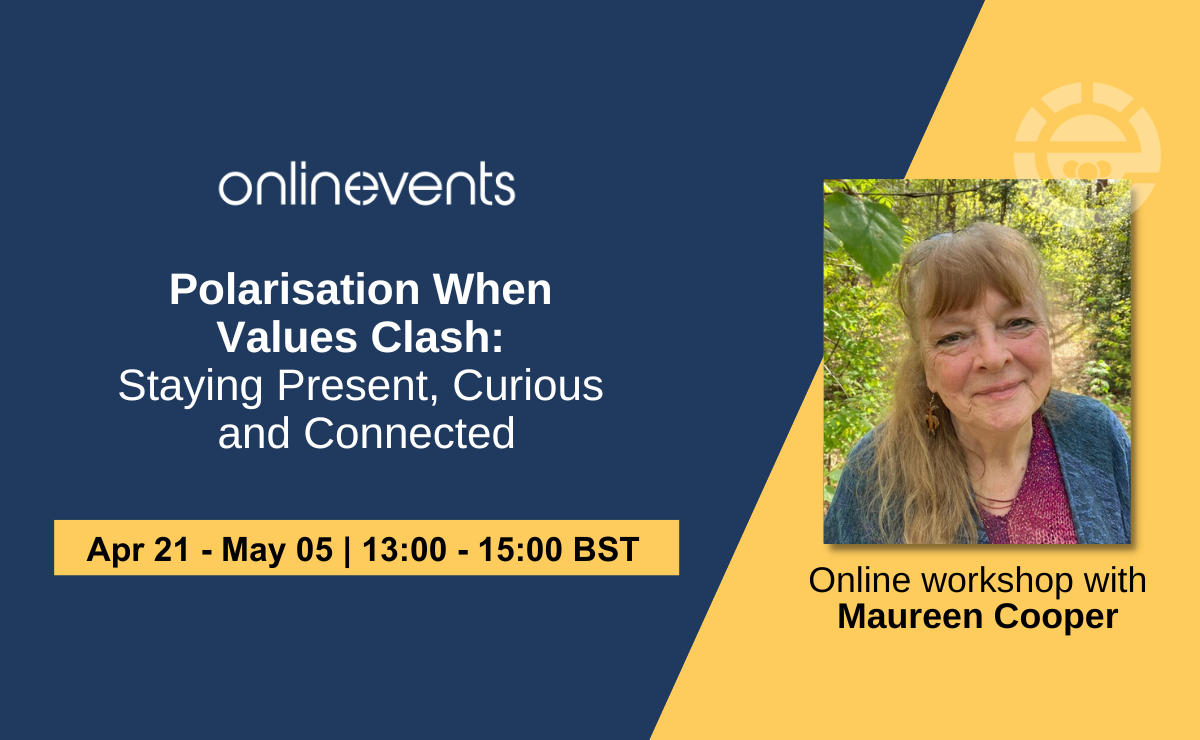
This reflective, experiential three-part online course is for counsellors (and those on their counselling journey) who want to stay grounded, ethical, and deeply human while the world feels anything but stable. We will focus on cultivating three capacities that support practice in charged contexts:
Presence — steadiness in uncertainty; staying in contact with self, client, and the moment
Curiosity across difference — keeping the relationship open when values clash or emotions run high
Connection — maintaining relational contact without collapsing, distancing, or bypassing pain
Clients are not usually looking for certainty or solutions in these moments; they are seeking a counsellor who can stay present, listen deeply, and hold complexity without judgement or withdrawal. This course supports you to strengthen that capacity — so clients can feel met, grounded, and less alone while navigating a world in turmoil.
What the sessions will include
Guided reflection to help you notice what is happening in you (emotionally and somatically) when the room becomes polarised or charged
Practices for returning to presence when you feel pulled into reactivity, certainty, or withdrawal
Ways of working with difference and values tension that protect dignity, relational contact, and ethical practice
Time to integrate what you’re learning between sessions, so it becomes usable in real client work
Who this course is for
This course is likely to be a good fit if:
You’re noticing more political, cultural, climate, or conflict-related material in sessions
You want to work ethically with values tension without “taking sides” in the room
You sometimes feel activated, stuck, or unsure how to stay relational in charged conversations
You want to strengthen steadiness, self-compassion, and sustainability in your practice
What you’ll leave with
More emotional and somatic presence when work feels activating or destabilising
Practical ways to notice and work with triggers, biases, and protective responses
Increased ability to stay curious under pressure (toward clients, colleagues, and yourself)
Tools for maintaining connection without collapsing or distancing
Greater clarity about the values that support ethical, compassionate practice in divided times
Session-by-session outline
Session 1 (21 April 2026): When the World Feels Unsettling
How global turmoil and polarisation show up in the therapy room — and how they land in us as practitioners. We’ll focus on steadiness, presence, and recognising the moment reactivity starts to take over.
Session 2 (28 April 2026): Cultivating Coping, Curiosity, and Capacity
How to keep the relational field open when values clash or emotions run high. We’ll work with curiosity as a practice, and explore how to stay ethical and compassionate without bypassing pain.
Session 3 (5 May 2026): Carrying Forward What Sustains Us
Integration and sustainability. We’ll focus on what helps you keep practising in a way that is grounded, humane, and enduring — especially when the wider world remains unsettled.
Learning outcomes
By the end of this three-part course, participants will be able to:
Recognise and reflect on the impact of global turmoil and polarisation on personal wellbeing and practice
Develop greater emotional and somatic presence when working with uncertainty and opposing views
Strengthen curiosity, especially when faced with values clashes, moral distress, or strong reactions
Identify and work with triggers, biases, and protective responses in emotionally charged encounters
Maintain relational connection without collapsing or distancing in uncomfortable conversations
Clarify values that support ethical, compassionate practice during times of social division
Apply reflective practices that support ongoing growth and sustainability in the work
In polarised and unsettling times, clients increasingly bring the world into the therapy room — fear about the future, anger at injustice, grief for what has been lost, and confusion about where they belong. These conversations can evoke strong feelings in us too: worry, grief, anger, moral distress, uncertainty, and the pull to become reactive or to withdraw.