
Upcoming events.
*
Upcoming events. *
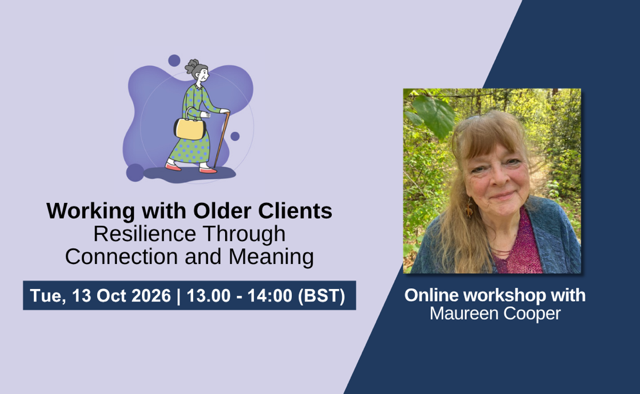
Working with Older Clients: resilience through connection and meaning
Later life can bring significant change, including retirement, bereavement, health challenges, changing relationships and shifts in identity and purpose. Building resilience is not simply about coping with adversity, but also about developing the resources that help us maintain wellbeing and thrive.
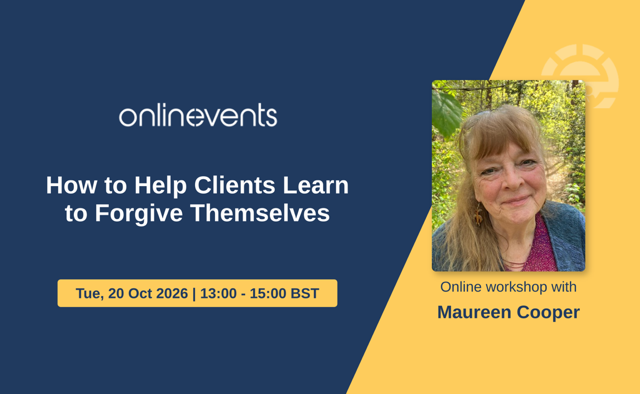
How to Help Clients Learn to Forgive Themselves
Learning to forgive ourselves is not easy but it essential for our wellbeing. When we forgive ourselves we allow ourselves to be free of the past and begin to heal and grow. It's through forgiveness that we make meaning out of our suffering and restore our self-esteem.
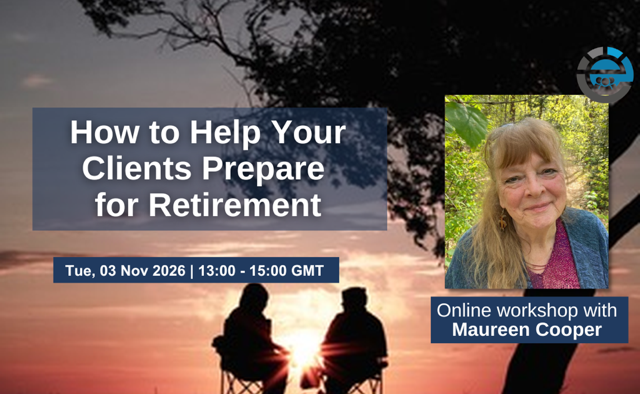
How to Help Your Clients Prepare for Retirement
Every second, two people somewhere in the world turn sixty. By 2050, there will be more than two billion people aged over sixty globally. As life expectancy increases, our understanding of ageing, work, and retirement is rapidly evolving. Although retirement ages have risen compared with previous generations, many people can still expect a significant period of life beyond their working years.
Working with Loss, Adaptation and Meaning in Later Life
Loss is an inevitable part of ageing, whether through bereavement, changing relationships, retirement, loss of health or independence, or shifts in identity and purpose. Yet loss is not only an experience of what is gone; it can also become an opportunity for reflection, learning, adaptation and personal growth.
Guiding Clients Through Forgiveness: Tutu's Four-Step Model
An accessible and compassionate way to find the ability to forgive.
Forgiveness can be a transformative process for clients struggling with hurt, anger, or unresolved conflict. This one-hour practical session introduces counsellors to Desmond Tutu’s four-step path to forgiveness, offering a structured, ethical approach to guide clients toward reconciliation and emotional freedom.
Beyond Shame: practical self-compassion skills for therapists
If you find that shame and self-criticism are common barriers in your therapeutic work, this workshop is designed for you. Over the course of one hour, you will uncover the transformative potential of self-compassion based on Kristin Neff’s research. Our session will unfold in three parts: we will start by examining the principles of self-compassion; then, participate in a guided self-compassion exercise; and conclude with strategies for effectively incorporating these practices into your therapy sessions.
It Feels Wrong: working with guilt and resistance to self-compassion
Many clients—and counsellors themselves—report feeling guilt, discomfort, or even anxiety when encouraged to practice self-compassion. This one-hour practical session explores the psychological and cultural roots of this resistance, drawing on research from Professor Paul Gilbert, Kristin Neff and related clinical insights from Compassion-Focused Therapy. Through
How to Help Your Clients Get Free from Resentment
Resentment is a common yet often entrenched emotional response to pain, disappointment, and perceived injustice. While it may initially serve a protective function, ongoing resentment can significantly impact psychological wellbeing and therapeutic progress.
This workshop explores resentment from multiple perspectives, supporting practitioners to identify its underlying emotional drivers.
Age-Based Bias in Counselling
Ageism is one of the most socially accepted yet least examined forms of discrimination, with significant impacts on mental health, identity, and help-seeking across the lifespan.
How to Help Your Older Clients Cope with Feeling Invisible
As people age, many report a growing sense of being overlooked in conversations, workplaces, healthcare settings, and even within their own families. This experience—often linked to ageism, life transitions, and shifting social roles—can significantly impact confidence, wellbeing, and engagement. Drawing on insights from Gerontology and Psychology, this practical two-hour CPD workshop equips professionals with the awareness and tools needed to recognise and address feelings of invisibility among older clients.
Guiding Clients Through Forgiveness: Tutu's 4-step model
An accessible and compassionate way to find the ability to forgive.
Forgiveness can be a transformative process for clients struggling with hurt, anger, or unresolved conflict. This one-hour practical session introduces counsellors to Desmond Tutu’s four-step path to forgiveness, offering a structured, ethical approach to guide clients toward reconciliation and emotional freedom.
Age-Based Bias in Counselling: What Therapists need to know
An opportunity to look clearly at one's own bias in terms of ageing.
Ageism is one of the most socially accepted yet least examined forms of discrimination, with significant impacts on mental health, identity, and help-seeking across the lifespan.
How to Help Your Clients Manage and Reduce Overwhelm
Many clients experience periods when the demands of work, relationships, finances, and everyday responsibilities begin to feel unmanageable. When pressures accumulate faster than a person can process or respond to them, feelings of overwhelm can arise, often accompanied by anxiety, confusion, exhaustion, or withdrawal.
Some individuals respond by pushing themselves harder and taking on more responsibility, driven by guilt or fear of falling behind. Others may avoid or disengage from the pressures they face. When sustained over time, these patterns can contribute to chronic stress, reduced wellbeing, and difficulties in functioning.
It Feels Wrong: working with guilt and resistance to self-compassion
Many clients—and counsellors themselves—report feeling guilt, discomfort, or even anxiety when encouraged to practice self-compassion. This one-hour practical session explores the psychological and cultural roots of this resistance, drawing on research from Kristin Neff and related clinical insights. Through discussion, brief experiential exercises, and case examples, participants will examine common fears and misconceptions about self-compassion (e.g. “it’s selfish,” “it will make me weak or lazy”) and learn how to address guilt-based blocks compassionately and effectively in therapeutic work.
Working with Shame and Self-criticism: Kirsten Neff'a Self-Compassion Framework
This one-hour practical session introduces counsellors to the core components of self-compassion—self-kindness, common humanity, and mindfulness—grounded in Kristin Neff’s evidence-based research. Through brief experiential exercises, reflection, and clinical application, participants will explore how to cultivate self-compassion for themselves and integrate it effectively into therapeutic work with clients to support resilience, emotional regulation, and wellbeing.
This is the first in the series of Enhancing Practice: CPD Lunch Hour a regular one-hour online training session for counsellors and therapists, designed to support high-quality, reflective professional practice.
How to Help Your Clients Navigate Ageism in a Youth-Focused World

About This Event 14.00 - 16.00 CET
Sub-title: Recognising, Assessing, and Addressing Age-Related Bias
Ageism is a pervasive yet often overlooked form of bias that can significantly impact clients’ identity, mental health, relationships, and life choices across the lifespan. In a culture that prioritises youth, clients may present with distress linked to ageing, invisibility, internalised stereotypes, workplace discrimination, health care experiences, or fears about relevance and worth.
This 2-hour CPD workshop supports counsellors to recognise how ageism—both external and internalised—may be shaping clients’ narratives, emotional wellbeing, and presenting issues. Participants will explore the psychological and relational impacts of age-related bias and learn how ageism can intersect with other forms of marginalisation.
Through theory, clinical reflection, and applied discussion, counsellors will develop skills to assess ageism sensitively in the therapeutic space and to respond in ways that support resilience, agency, and meaning-making. The workshop will offer practical strategies for helping clients challenge limiting beliefs about ageing, process age-related loss or transition, and strengthen a more integrated and compassionate sense of self.
Learning Objective Participants Can Expect From This Event
Increased awareness of ageism and its clinical manifestations.
Enhanced assessment skills for identifying age-related bias in client work.
Practical interventions to address internalised ageism.
Who is This Workshop Appropriate For?
Counsellors, clients
How May This Workshop Impact Your Practice?
Help participants have greater confidence supporting clients across different life stages.
Forgiveness Without Pressure: A Framework for Agency After Harm
About This Event 11.00 - 13.00 CET
This two-hour workshop is designed for counsellors who work with clients caught in the long shadow of past harm. Drawing on the work and insights of Desmond Tutu, the session explores how not forgiving—while often a protective and understandable stance—can leave clients emotionally bound to those who hurt them.
Rather than promoting forgiveness as a moral requirement or therapeutic goal, this workshop offers a nuanced framework for understanding not forgiving as a position with psychological and relational costs. Participants will examine how clients can remain “at the mercy” of past injury, even when the harm is long over, and how forgiveness—when freely chosen—can function as an act of self-liberation rather than reconciliation or excusing abuse.
The workshop emphasises client agency, and readiness, equipping counsellors to hold complexity: honouring the reality of harm while gently opening space for freedom, choice, and the reclaiming of power.
Image from Freepik
Learning Objective Participants Can Expect From This Event
Understand not forgiving as a meaningful and often protective client stance, rather than resistance or pathology.
Identify the emotional and relational costs that can arise when clients remain bound to past harm.
Articulate forgiveness as a potential pathway to agency and freedom, distinct from condoning, forgetting, or reconciling.
How to Help Your Clients get Free from Resentment
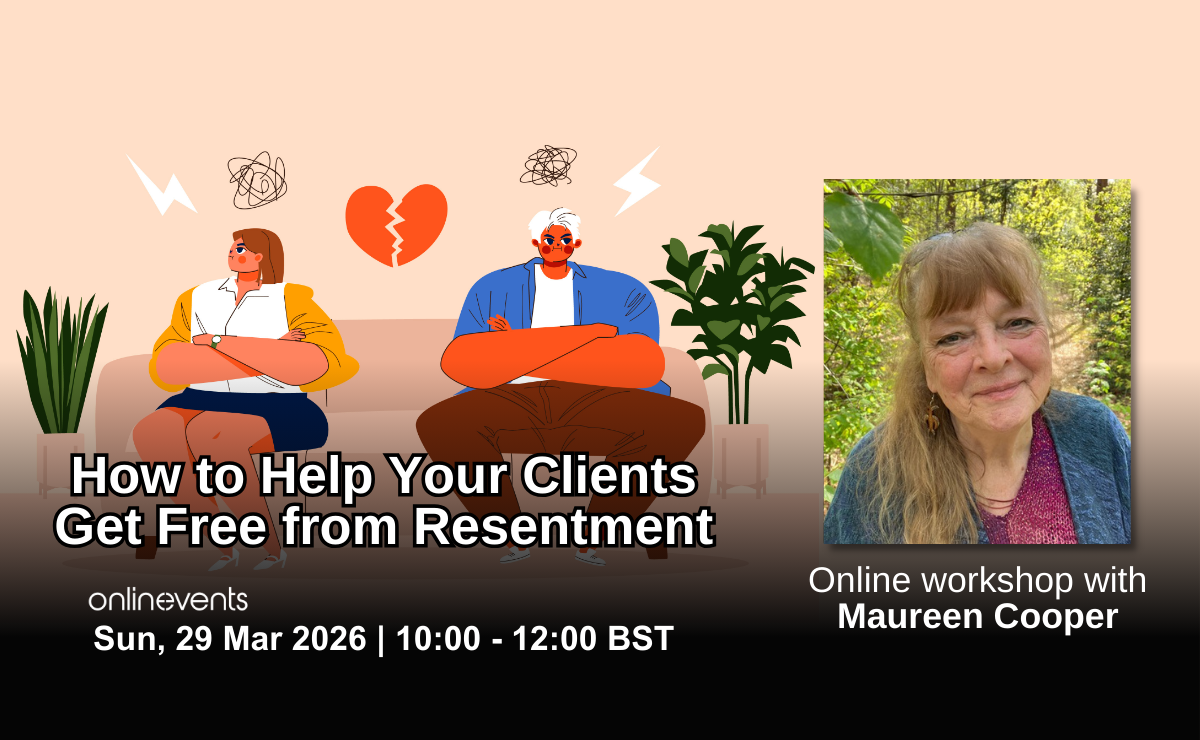
Resentment is a common yet often entrenched emotional response to pain, disappointment, and perceived injustice. While it may initially serve a protective function, ongoing resentment can significantly impact psychological wellbeing and therapeutic progress.
This workshop explores resentment from multiple perspectives, supporting practitioners to identify its underlying emotional drivers. Participants will examine when resentment is primarily linked to anger, and when it is rooted in envy or jealousy. The workshop also considers how resentment can gradually develop into bitterness, and the consequences this has for mental health and relational functioning.
Drawing on psychologically informed approaches to working with anger and envy, the workshop introduces practical strategies and interventions to help clients respond more skilfully to hurt and disappointment. By normalising human vulnerability and shared experience, practitioners are encouraged to support clients in moving towards greater acceptance, perspective-taking, and forgiveness where appropriate.
The workshop is delivered through a combination of short teaching inputs, video material, reflective exercises, group discussion, and experiential learning. Participants will receive a PDF workbook containing key concepts, quotations, diagrams, and practical exercises for use in clinical practice.
Learning Objective Participants Can Expect From This Event
Recognise the different expressions of resentment and explore alternative strategies for working with these feelings
Understand how the brain’s threat-based focus reinforces resentment, and learn ways to counterbalance this tendency
Appreciate the cumulative impact of unresolved resentment on overall wellbeing

How to Help Clients Learn to Forgive Themselves
Learning to forgive ourselves is not easy but it essential for our wellbeing. When we forgive ourselves we allow ourselves to be free of the past and begin to heal and grow. It’s through forgiveness that we make meaning out of our suffering and restore our self-esteem. It's a chance to tell a new story of who we are but we need to be authentic. We won't be able to enjoy the peace of forgiving ourselves by faking it. We must endeavour to take an honest look at ourselves and to go through the process.
There are many layers to forgiving ourselves. Being able to acknowledge a mistake, and to attempt to put it right is one level. Feeling that we are unworthy of forgiveness and being steeped in shame for not being perfect is another deeper level.

How to Help Your Clients Overcome their Fear of Failure
In this workshop, we will explore how fear of failure can be seen as the dark side of perfectionism, leading to procrastination and a kind of immobilisation. Although these behaviours are often adopted as a way of protecting the individual, they can act as a brake on spontaneity, creativity, and self-worth. At its root, fear of failing can be seen as a fear of being unwanted and unloved—an attempt to please those around us in order to keep their affection.

Untitled Event
ATTENTION: Timings are according to European Central Time
It seems that two people celebrate their sixtieth birthday every second. By 2050 there will be two billion older people on our planet. As the amount of time that we can reasonably hope to stay alive increases, our whole view of ageing is called into question. Although the retirement age has increased considerably since our parents’ generation, we can look forward to a reasonable stretch of time to enjoy after we conclude our working lives.
Many of us look forward to our retirement with mixed feelings. We long for the space and freedom to do all the things we always wanted to do but we fear the loss of identity, purpose and social connectedness that our jobs have given us. It’s an important moment to recognise that retirement is a major transformation that will need time and work in order for us to truly benefit from it in a sustainable way.
This workshop will examine how we can prepare for retirement with enthusiasm by revisiting our sense of purpose and meaning. The values that have sustained us throughout our working life can be re-purposed to inspire our retirement years. Instead of seeing leaving work as a time of loss, we can reach out and embrace the freedom and opportunities opening up for us now that our life is changing. By facing our ageing process with confidence, we can make learn to view our retirement as a new chapter of experimentation and ongoing development.
This two hour workshop consists of talks, video extracts, exercises, sharing and discussion. Participants will receive a PDF workbook with all the main quotes, charts and exercises.
Learning Objective Participants Can Expect From This Event
Explore the worries and concerns surrounding retirement.
Understand what we want to gain from retirement.
Approach retirement as an opportunity for growth and personal development.
For more information and to register click here
How to Help Your Clients Resist Feeling Invisible
ATTENTION: Timings are according to CET
The ageing process is a life-long project effecting all of us—and yet it seems as if it can somehow be manipulated into a means by which many of our unworked out prejudices are allowed to run rampant.
Take the experience of people over 50 who feel as if they are becoming invisible. Although this can affect men as well, the people who describe this happening to them are overwhelmingly women. As we all know, women in their fifties are heading towards menopause and the end of their reproductive cycle. At the same time as their bodies are undergoing major changes, their appearance changes too and they can no longer be seen as youthful! When many men are at the zenith of their professional lives and commanding respect and attention, women—whether professionals, or not—become increasingly exposed to ageism.
This workshop will focus on enabling participants to face their ageing process head on and to discover how they want to deal with it on their own terms. Invisibility is not inevitable. Each of us can choose how we respond to it—whether we come to accept it and use it to our own advantage, or whether we debate it and demonstrate a different way of ageing.
This two hour workshop consists of talks, video extracts, exercises, sharing and discussion. Participants will receive a PDF workbook with all the main quotes, charts and exercises.
Learning Objective Participants Can Expect From This Event
To come to see the ageing process as an opportunity for increased self-awareness and development.
To uncover the underlying prejudices that society lays on the ageing process.
To experiment with fresh approaches to ageing that encourage flourishing.
How to Help Your Clients Let Go of Resentment
ATTENTION: Timings are according to CET
When we experience pain and hurt it's all too easy to cling to feelings of resentment like an old friend. We become afraid to let them go because then we don't know how to resolve our suffering. If we are free of resentment, how will others know we've been hurt?This workshop aims to look at resentment from several different angles. We will consider when resentment has more to do with anger and when it is a result of envy and jealousy. We'll explore the impact on our wellbeing and how easily resentment can slide into bitterness.
Through exploring the antidotes to anger, and envy the workshop will suggest alternative ways to cope with our challenges. By recognising that all human beings go through similar difficulties and disappointments, we begin to glimpse a bigger picture and open our minds to the possibilities of acceptance and forgiveness.
This two hour workshop consists of talks, video extracts, exercises, sharing and discussion. Participants will receive a PDF workbook with all the main quotes, charts and exercises.
For more information and to register click here