Increasing my wellbeing capital this summer
How do we understand wellbeing capital?
We build wellbeing capital all through our lives. It has to do with understanding how we need to make provision for ourselves to live in a way that suits us, and building networks and relationships about how things work and how we can make things happen. We also need to understand where we can go for help or support but at the root, there is the personal work of knowing when to activate this capital and make it work for us when we need it. There’s a deep thread of acceptance and letting go of false ideas of what we think we need.
How this played out for me this summer
It’s been a long, hot summer with many things to celebrate but on a quiet, private level one of the places I am finding satisfaction is having been able to finally accept some more of the ways in which I need help. Conditions such as rheumatoid arthritis become more demanding as we age and it can be hard to come to terms with what that means for mobility and independence—I have certainly find it so. It’s been an experience to reach out and discover that there are resources out there that can help you to make this happen.
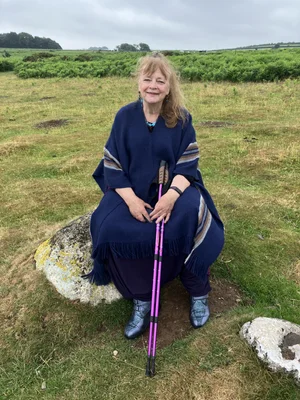
Taking courage and inspiration from starting to use a rollator, I have taken time to assess problem areas and reached out to see what can be done to ease them. Maybe you’ve read my blog from the spring where I tell the story of fearing that a rollator would make me feel horribly separate and weak. What I discovered is, with its support, I am feeling more empowered because it enables me to walk further and more quickly.
Making the shift to asking for help
Emboldened by this experience, I decided to finally ask our local council for help in making our lavatory and shower safer for me. It’s something else I had been nervous of—officially admitting that I needed help. In fact, the Amsterdam city council has a policy of keeping older people in their homes and so they have a system to upgrade social housing to meet the needs of their tenants. It’s not especially speedy but it’s efficient and reliable. Again, now we’re living with the improvements, it’s hard to believe it took me so long.
An amazing victory
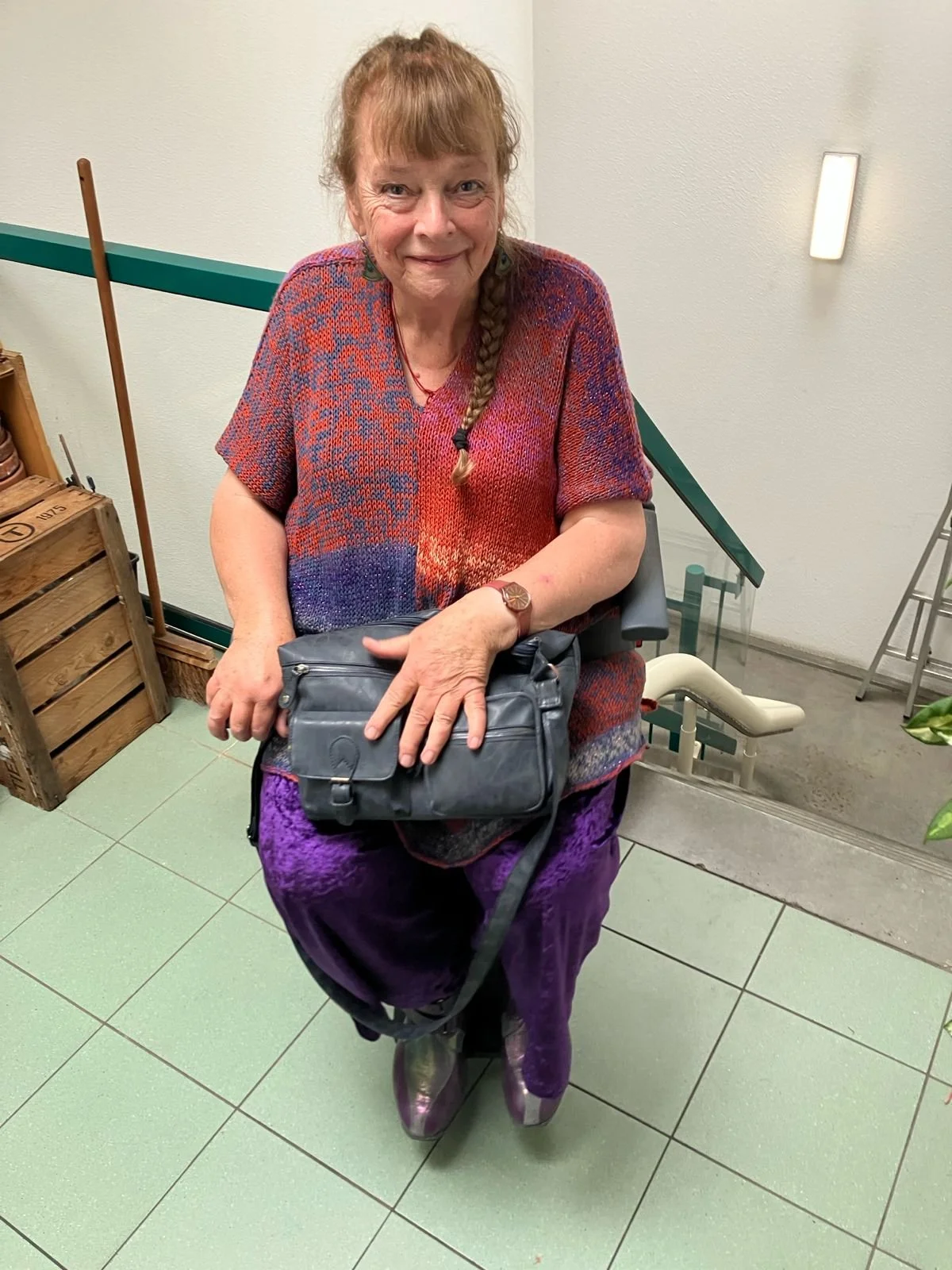
Well over a year ago I applied for a stairlift to be fitted into the stairwell of the eight flights of stairs that bring us up to the fourth floor, where we live. Perhaps one day when it’s all settled, I will write about the whole journey to make this happen—just now it is still too soon, too raw. For now, it’s enough to say that although the council support people staying in their homes, they do have financial limits. Because we live so high a stairlift in my case cost more than half as much again as the council budget.
Once again, I discovered there are people that help in situations such as these. We got in touch with a neighbourhood group that works to assist people to navigate the complexities of working with the council. They helped us build our case for the stairlift and then helped us to research and secure the extra funding. It took a long time and there were many pitfalls but a few weeks ago, a stairlift was installed. I am revelling in the experience of coming home without dreading the struggle to get up the stairs—I have even been out more than once in the same day!
The joy of a skootmobiel
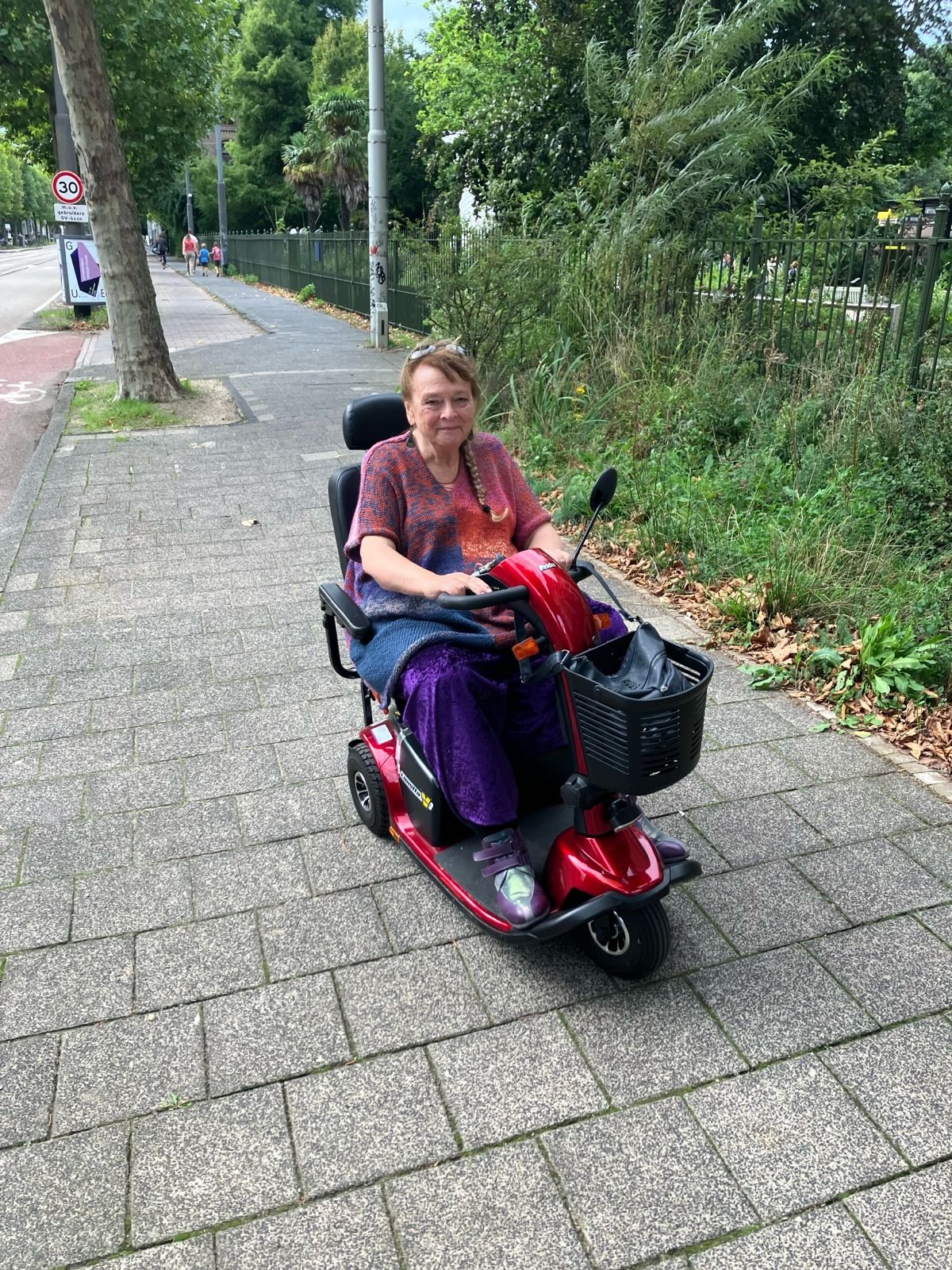
A kind of off shoot of applying for the stairlift is that now I have a skootmobiel. During one of the assessment interviews we had to have for the stairlift it was suggested that I could benefit from one, it had never occurred to me to apply…..I was caught up in thinking this was for other people but not for me.
How wrong I was! It enables me to go about independently, without always asking for a lift, or negotiating a tram. The feeling of freedom and possibility is marvellous. All the small trips that we make and never think about—like the library, the GP, local meetings, classes and so on—are now things I can do on my own, in my own way. Instead of feeling dependent with having to have a skootmobiel, I feel the opposite.
Why all this matters
However much we want to claim our age, and to feel empowered as an older person it is a simple fact of life that growing older has many challenges, on a variety of levels. If we want to challenge the pervading view of old age as something to hide from, or even deny, then we will need to gather around us all the resources we need to support our wish to flourish as we age, rather than decline. Working with ourselves to confront fears and assumptions about how we do that is a demanding journey but one that we must persist with. Coming to accept when we could use some support, and then knowing where to look for it are valuable ways to engage our well-being capital
We build wellbeing capital all through our lives. It has to do with understanding how we need to make provision for ourselves to live in a way that suits us, and building networks and relationships about how things work and how we can make things happen. We also need to understand where we can go for help or support but at the root, there is the personal work of knowing when to activate this capital and make it work for us when we need it. There’s a deep thread of acceptance and letting go of false ideas of what we think we need.