In the early days of realising that I had rheumatoid arthritis I was in a lot of pain and quite scared. Suddenly I could not walk as well as I usually did and even getting dressed was difficult. It took a long while to get the medications sorted out and in the meantime I struggled.
At that time, I was consulting a Tibetan doctor regularly. After one session she told me that she had her mother’s rollator to hand and I could borrow it for a bit to try out if it would help me. I cringed inwardly—how could I walk along the street with one of those things? It’s a measure of how much pain I was in that I accepted to use it to help me to get back to the car. We put it in the trunk, and it stayed there until we returned it.
More than ten years have gone by since then—ten years of working with my lessening mobility. Of course, I’m older now and it’s clear that my walking is only becoming more problematic, not less. There is grief around this but strangely, a source of courage also. Admitting to the pain enables me to see my situation more clearly and to weigh up its impact. From there is a small step to let go of unrealistic expectations and to realise that I do have choices.
In my early sixties I wanted to look younger than I was. Now I feel a sense of accomplishment that I have reached the age I have. Why wouldn’t I want to acknowledge my years, my experience, my stories? I’ve come to see that ageing has its own adventures, and opportunities to learn and grow. I used to worry that getting older meant things diminishing—and it’s true that some things do but many things become more possible if we can sort through our anxieties and denial and work with what we have.
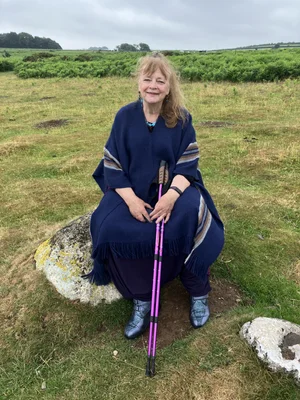
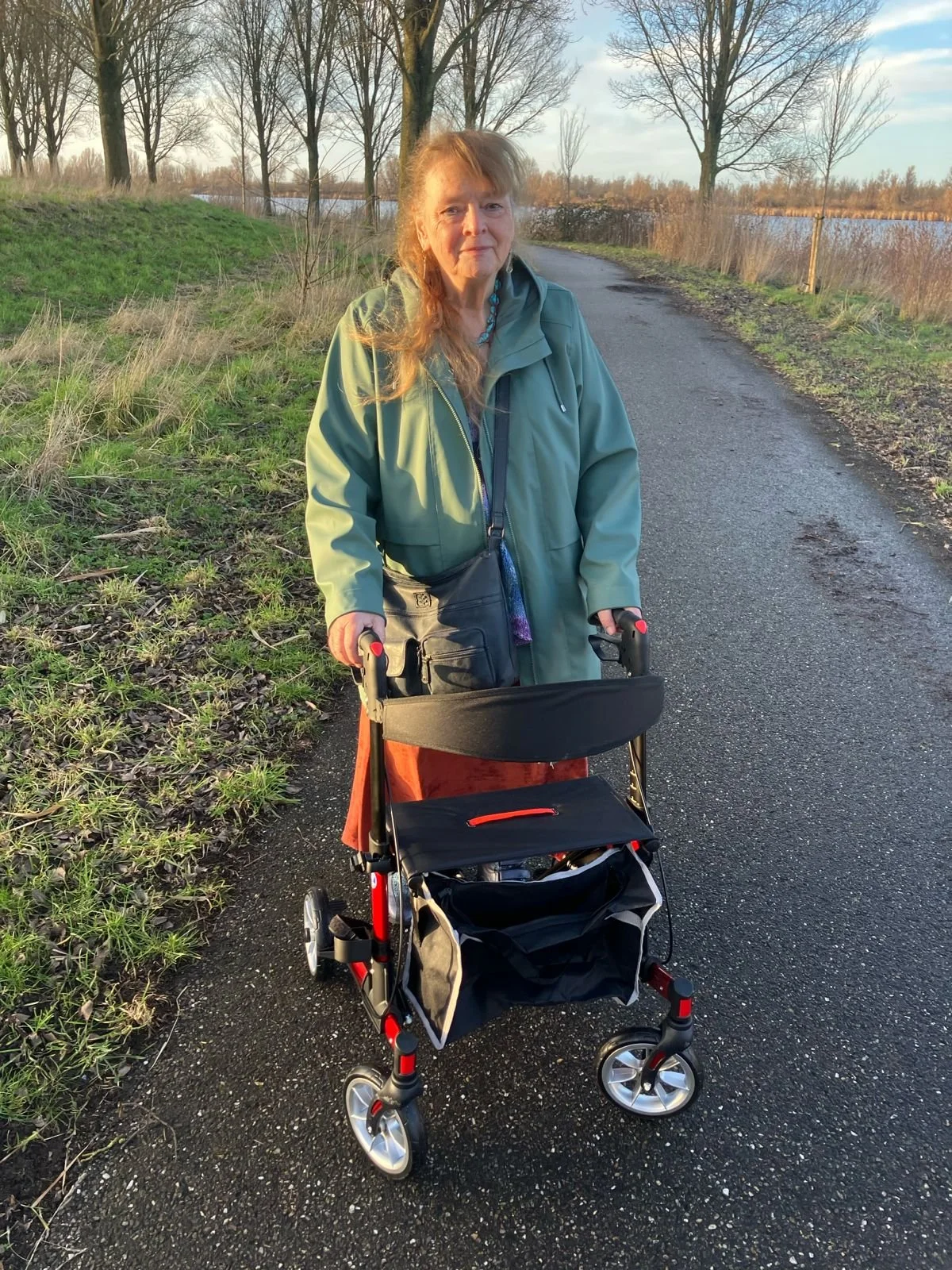
A couple of weeks ago—after careful research—we found a local shop selling rollators, mobility scooters and such like. We found an excellent design that was bright and modern and could be folded up for travelling. The shop was run by a man in his thirties who seemed to know all the machines inside out. He was friendly, empowering and with an easy sense of humour. A deeply buried part of me wondered if I would feel shame as I walked along the pavement outside the shop to test the rollator I had chosen. It fluttered into consciousness for a moment and quickly dissolved. What mattered was that I could walk faster, for longer with less discomfort that when using my Nordic sticks.
Coming to accept that I needed a rollator has enabled me to make some helpful changes. Instead of making me feel fragile and marginal—as I had feared in the past— it’s widened my horizons. The whole experience has got me thinking that working out what I need to help me flourish as I get older is an important part of my ageing journey. To do that I need to be practical and clear-eyed, rather than fearful. Understanding what will help us and then trying to make it happen must be done bravely, without a lot of baggage that seeps through from other people’s ideas, old fears or habits.
Do you use a rollator? Have you had a similar experience? I’d love to hear….